2003-10-28
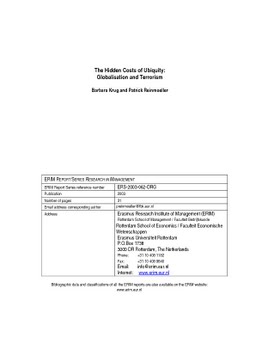
The Hidden Cost of Ubiquity: Globalisation and Terrorism
Publication
Publication
Terrorism is not a natural hazard outside the range of corporate decision-making. Simple micro-economic analysis shows how globalisation changed the supply of terrorist attacks and the costs for tolerating terrorist hazard. Approaches developed in organizational strategy help to single out three strategic decisions directly affecting the vulnerability of firms in a globalised world: exposure, geographical spread, and organisational form. The analysis suggests that the gains from ubiquity, leanness in production, and long-term commitment need to be adjusted for the terrorist hazard involved.
| Additional Metadata | |
|---|---|
| , , , , | |
| , , , | |
| hdl.handle.net/1765/993 | |
| ERIM Report Series Research in Management | |
| Organisation | Erasmus Research Institute of Management |
|
Krug, B., & Reinmoeller, P. (2003). The Hidden Cost of Ubiquity: Globalisation and Terrorism (No. ERS-2003-062-ORG). ERIM Report Series Research in Management. Retrieved from http://hdl.handle.net/1765/993 |
|