1984
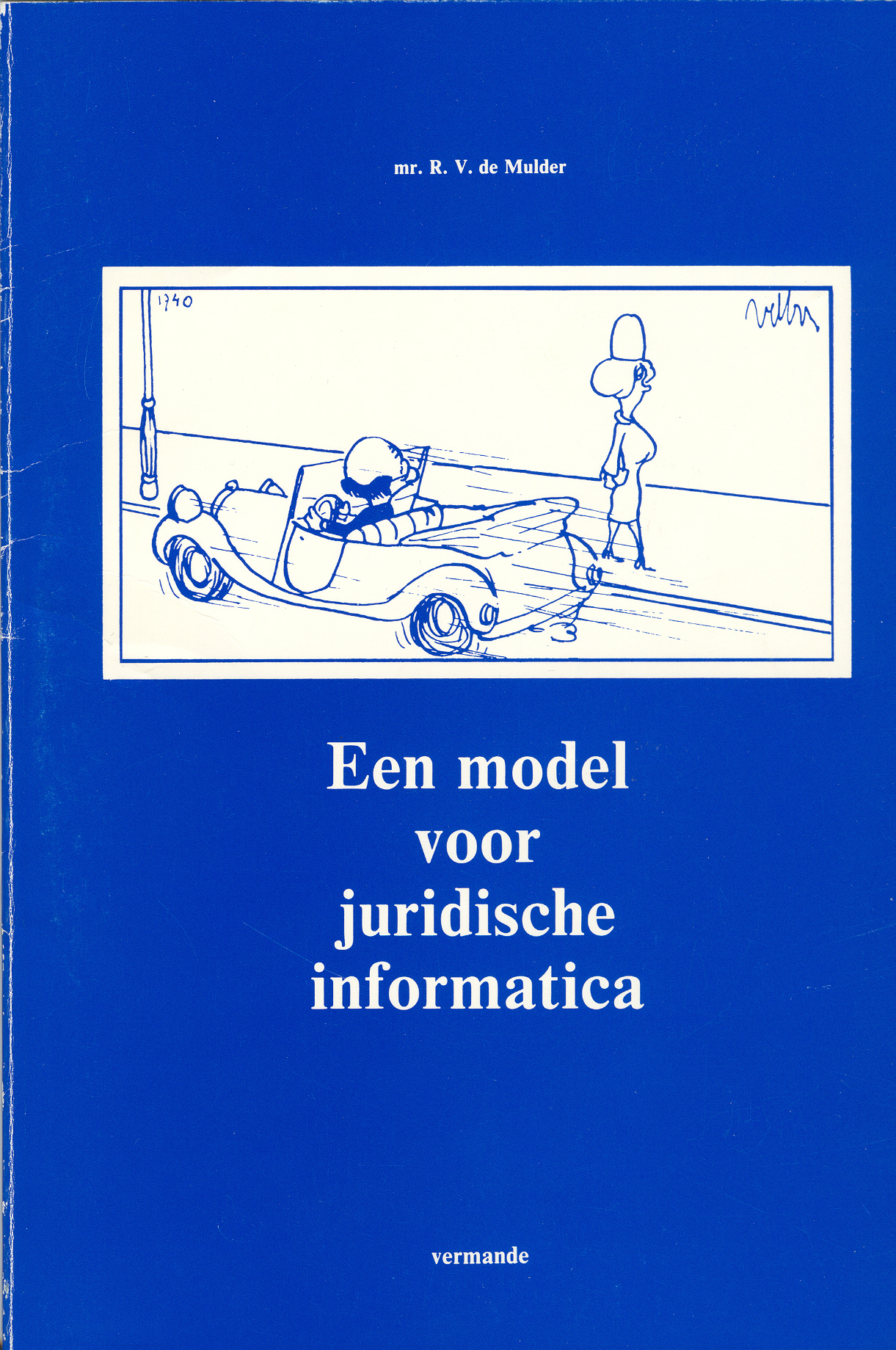
Een model voor juridische informatica
Publication
Publication
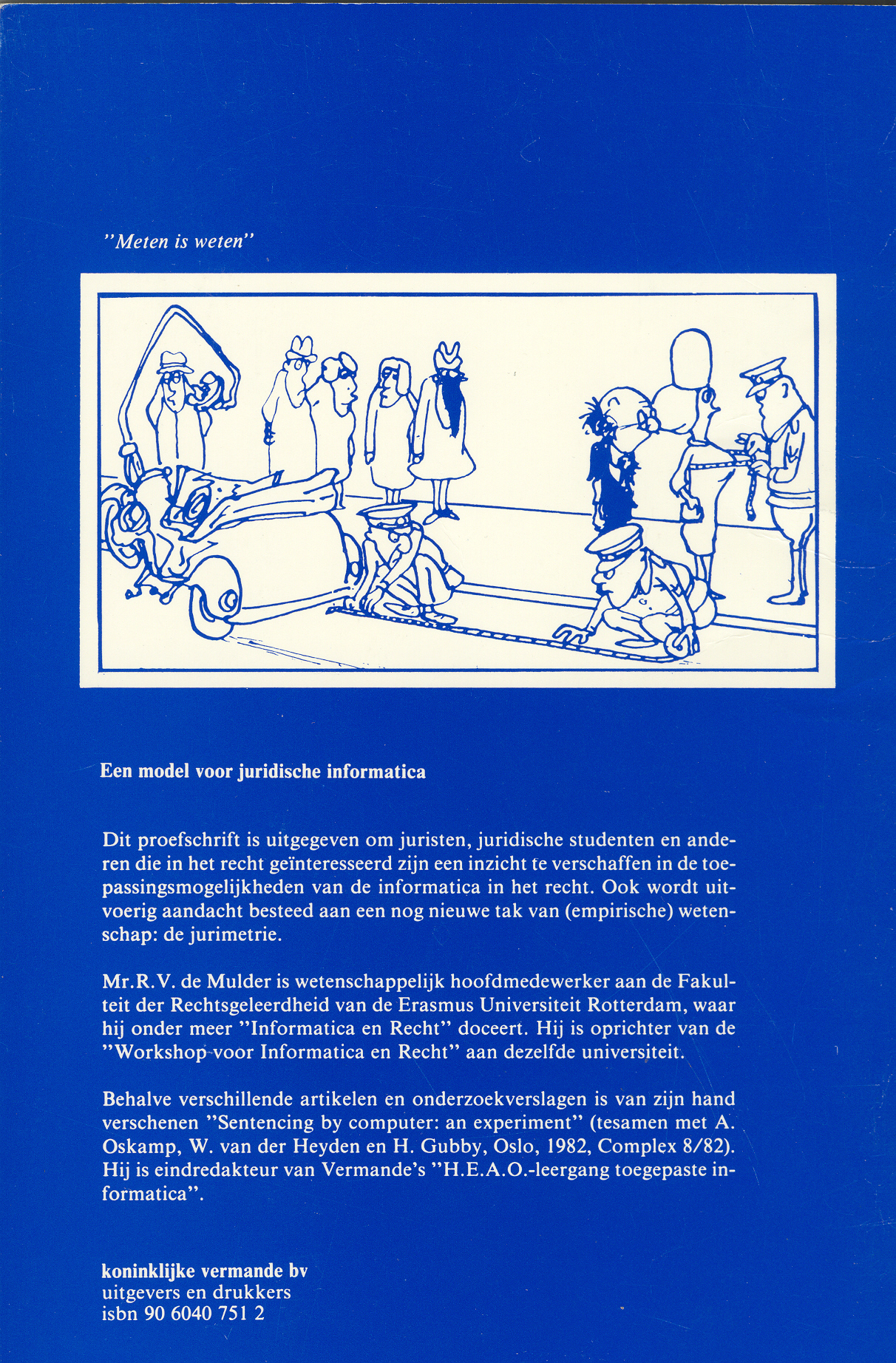
A model for legal informatics; the application of computer science to law. The present day world is marked by rapid and extensive automation. Automation has had its repercussions in a number of professions, and the legal profession is not exem,pt. Lawyers have come into contact with automation through questions of a legal nature associated with the process of automation, for example computer contracts, privacy and computer crime. They are also faced with a more extensive use of computers within the legal profession itself, for example text processing and documentation work. Informatics is also of particular importance to those engaged in aacdemic research. "Legal informatics" is the study of the apllication of computers in the theory and practice of law.
| Additional Metadata | |
|---|---|
| , , | |
| Erasmus University Rotterdam | |
| hdl.handle.net/1765/1218 | |
| Organisation | Erasmus School of Law |
|
de Mulder, R. (1984, January). Een model voor juridische informatica. Retrieved from http://hdl.handle.net/1765/1218 |
|
| Additional Files | |
|---|---|
| BACK.JPG Cover Image , 2mb | |
| FRONT.JPG Cover Image , 1mb | |
| HFD11.PDF Final Version , 1mb | |
| HFD7.PDF Final Version , 1mb | |
| HFD13.PDF Final Version , 1mb | |
| HFD9.PDF Final Version , 1mb | |
| HFD6.PDF Final Version , 881kb | |
| HFD12.PDF Final Version , 736kb | |
| HFD1.pdf Final Version , 643kb | |
| APPENDIX.PDF Final Version , 618kb | |
| HFD3.PDF Final Version , 602kb | |
| HFD5.PDF Final Version , 468kb | |
| HFD4.PDF Final Version , 466kb | |
| HFD10.PDF Final Version , 457kb | |
| HFD2.pdf Final Version , 313kb | |