2000
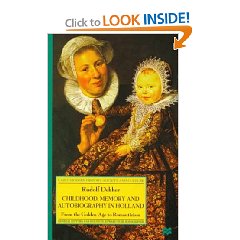
Childhood, memory and autobiography in Holland : from the Golden Age to Romanticism
Publication
Publication
Between the 17th and 19th centuries, autobiographers and diarists invented new ways to write about childhood and children. At the same time, pedagogical ideas about child-rearing changed. This book looks at the connection between these developments. Childhood became more highly valued as a phase of life, and children were taken more seriously. This is shown in chapters on child's play, punishment, wet-nursing, and independence. Around 1800, in diaries, parents more openly grieved about the loss of a child, which indicated both a change of literary conventions and changes in the way emotions were felt and expressed. Finally, autobiographers wrote more and differently about their early years, and developed new memory strategies.
| Additional Metadata | |
|---|---|
| , , , , , , | |
| St. Martin's Press, New York | |
| hdl.handle.net/1765/16964 | |
| Organisation | Erasmus School of History, Culture and Communication (ESHCC) |
|
Dekker, R. (2000). Childhood, memory and autobiography in Holland : from the Golden Age to Romanticism. Retrieved from http://hdl.handle.net/1765/16964 |
|
| Additional Files | |
|---|---|
| INDEX.PDF Final Version , 428kb | |
| TITEL.PDF Final Version , 109kb | |
| ACKNOWLEDGEMENTS.PDF Final Version , 71kb | |
| LIST OF PLATES .PDF Final Version , 69kb | |
| CONTENTS.PDF Final Version , 29kb | |
| cover.jpg Cover Image , 14kb | |