2011-04-06
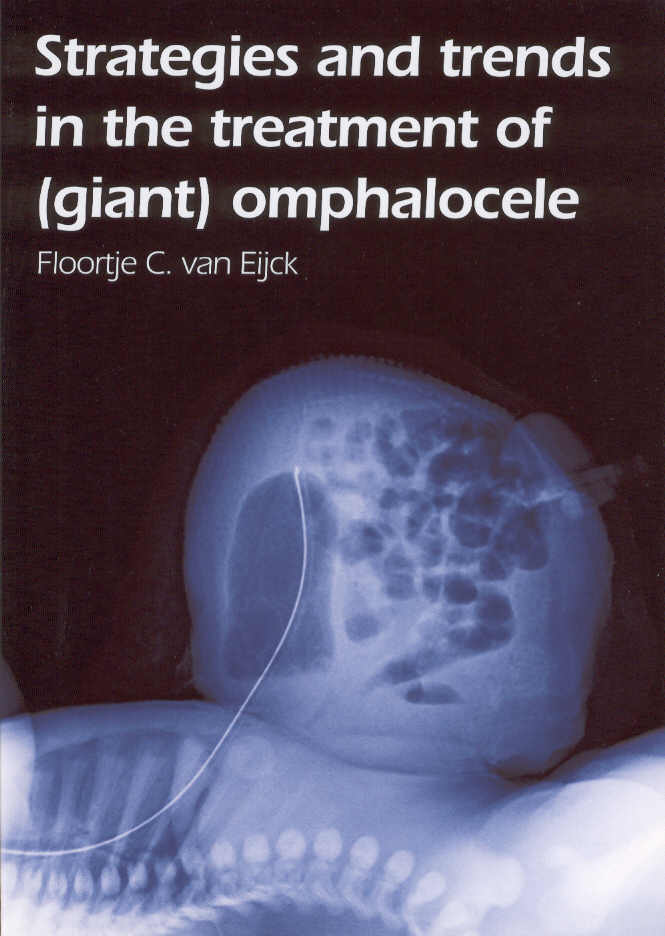
Strategies and trends in the treatment of (giant) omphalocele
Publication
Publication
Strategieën en trends met betrekking tot de behandeling van (giant) omphalocele
The management of giant omphaloceles remains a challenge for pediatric surgeons. Although the mortality rate is still high (up to 20%) in case of multiple congenital anomalies, surviving patients with omphalocele achieve a state of health and quality of life comparable to that of general population peers. Results from our study confirm the hypothesis that neonates with a congenital abdominal wall defect have a high risk for adhesive small bowel obstruction and could benefit from adhesion prevention. Awaiting complete epithelialisation before operation of giant omphalocele might reduce serosal injury and limit adhesiogenic areas. The liver was partly unprotected in all giant omphaloceles evaluated in this thesis. In case of an incisional hernia, the liver was located underneath the abdominal defect. A pre-operative ultrasound study is recommended, therefore. Furthermore, the parents should receive good documentation and information. The question remains whether contact sports and other risk behaviour should be advised against, as there is no indication of more blunt trauma in these patients in the literature. The results of the questionnaire sent to the authors do not show a consensus for a generally accepted treatment method after more than thirty years of innovations in the management of patients with a giant omphalocele. The newly introduced Component Separation Technique seems to have a good outcome. The herniation rate is low, and prosthetic materials are not needed. However, the question remains if delayed closure with this technique is better than immediate staged closure. There is not yet an evidence base; we shall have to await the long-term results of the published techniques. Based on these outcomes, a randomized multicenter trial comparing the staged and delayed techniques is recommended. Until then, we remain dependent on expert opinion.
| Additional Metadata | |
|---|---|
| , , , , | |
| MOC ManagementIndofin Groep,Afdeling kinderchirurgie Erasmus MC,Johnson & Johnson B.V.,Covidien,Synthes B.V. | |
| Erasmus University Rotterdam | |
| hdl.handle.net/1765/22906 | |
| Organisation | Erasmus MC: University Medical Center Rotterdam |
|
van Eijck, F. (2011, April 6). Strategies and trends in the treatment of (giant) omphalocele. Retrieved from http://hdl.handle.net/1765/22906 |
|
| Additional Files | |
|---|---|
| 3286_Eijck, Floortje Clemens van.jpg Cover Image , 47kb | |
| stellingen van eijck.pdf , 38kb | |