
2011-11-10
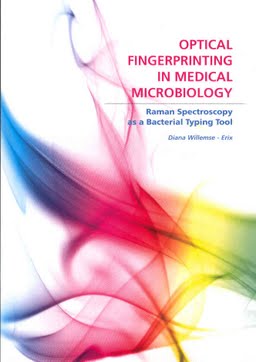
Optical fingerprinting in medical microbiology; Raman spectroscopy as a bacterial typing tool
Publication
Publication
Het gebruik van optische vingerafdukken in de medische microbiologie; Raman spectroscopie als bacteriële typerings methode
Bacteria are present everywhere on earth and form a large part of the world’s biomass (41). It has been estimated that there are approximately ten times as many bacterial cells as there are human cells in the body. The majority of bacteria present in or on the body are harmless and many are even beneficial (human flora in the gut and on the skin). Besides in or on the human body, bacteria are also found in all our surroundings and, obviously but unfortunately, also in hospitals and health care centers. The population of organisms in hospitals is successfully adapted to the (unnatural) environment present. Many clinically relevant bacterial species have evolved the capacity to survive in this unnatural habitat. Some characteristics that allow them to survive include expression of adhesion factors specific for human tissue and medical equipment and resistance to frequently used antiseptics and antibiotics. Their presence is a risk for the acquisition of infections, especially in critically ill and immune compromised patients. When a patient acquires an infection during a hospital stay, this infection is normally referred to as a hospital acquired infection (HAI) or nosocomial infection. CDC defines an HAI as an infection that is secondary to the cause of admission and not present or incubating at the time of admission (16). HAIs may be caused by infectious agents from endogenous sources (body sites such as skin, nose, and gastrointestinal tract) or exogenous sources (medical devices, health care personnel, other patients or the environment).
| Additional Metadata | |
|---|---|
| , , | |
| Erasmus MC: University Medical Center Rotterdam | |
| A.F. van Belkum (Alex) | |
| hdl.handle.net/1765/26855 | |
| Organisation | Erasmus MC: University Medical Center Rotterdam |
|
Willemse-Erix, D. (2011, November 10). Optical fingerprinting in medical microbiology; Raman spectroscopy as a bacterial typing tool. Retrieved from http://hdl.handle.net/1765/26855 |
|
| Additional Files | |
|---|---|
| Cover thesis Diana Willemse.pdf , 3mb | |
| 3402_Willemse-Erix, Hendrina Fransisca Maria.jpg Cover Image , 44kb | |
| Summary thesis Diana Willemse.pdf Final Version , 13kb | |
