2002-01-23
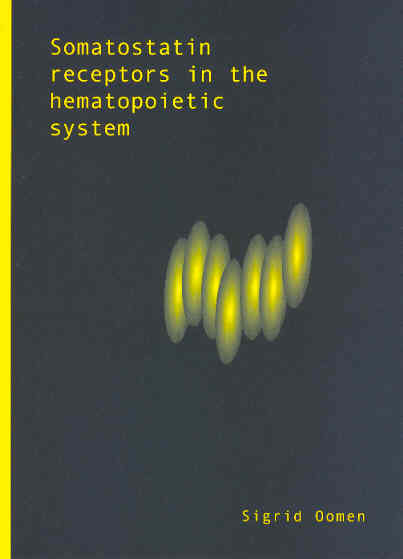
Somastatin receptors in the hematopoietic system
Publication
Publication
Somatostatine receptoren in het hematopoiëtisch systeem
Multiple interactions exist between the immune, hematopoietic, endocrine and nervous systems [1,2]. The bi-directional communication between the immune/hematopoietic and nervous systems is mediated by complex mechanisms involving multiple soluble factors (e.g., neuropeptides, neurotrophic factors, neurotransmitters and cytokines) produced by each system [3-5]. Examples of such factors are the neurotransmitter neuropeptide Y [6], produced by megakaryocytes [7], substance P (SP), which enhances the proliferation of primitive bone marrow cells and progenitors [4] and nerve growth factor (NGF), which contributes to differentiation of human basophils [8] and stimulates the release of inflammatory mediators from these cells [9]. A number of studies have demonstrated the expression of somatostatin receptors on cells derived from several hematological malignancies and have shown that somatostatin inhibits proliferation of these cells [1 0]. However, little is known of the effects of somatostatin on normal blood cell formation (hematopoiesis). This thesis comprises studies dealing with the role of somatostatin, a neuropeptide with multiple functions in the body, in hematopoiesis
| Additional Metadata | |
|---|---|
| , , , | |
| I.P. Touw (Ivo) , B. Löwenberg (Bob) | |
| Erasmus University Rotterdam | |
| hdl.handle.net/1765/31853 | |
| Organisation | Erasmus MC: University Medical Center Rotterdam |
|
Oomen, S. (2002, January 23). Somastatin receptors in the hematopoietic system. Retrieved from http://hdl.handle.net/1765/31853 |
|
| Additional Files | |
|---|---|
| stellingen Oomen.pdf , 29kb | |
| 1807_Oomen, Petronella Maria Antonia.jpg Cover Image , 14kb | |