2012-06-20
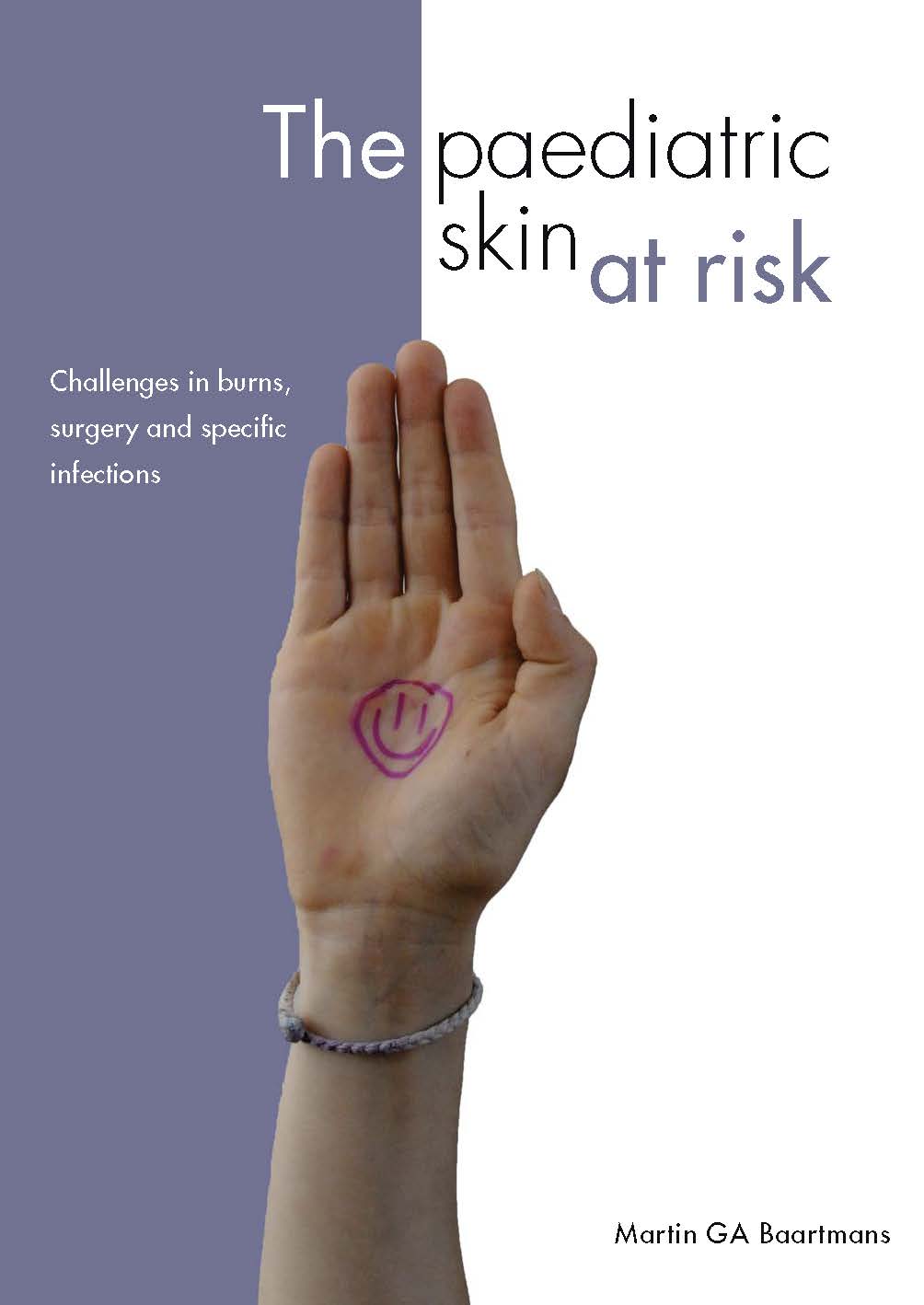
The Paediatric skin at risk: Challenges in burns, surgery and specific infections
Publication
Publication
The skin, the largest human organ, provides the body shape and is the main organ that protects our body against intruders such as heat, cold, trauma, or infections. A number of important functions are listed here: - Regulation of body temperature - Sensory function: touch, feel and pain stimuli - Regulation of water loss - Production of vitamin D, needed for bone formation - Food and oxygen supply to the body - Communication: for example, red with embarrassment, pale with fear - Protection from mechanical, chemical and radiation damage - Innate immunity Severe damage or disorders such as burns scars, giant melanocytic naevi have a major impact on a person’s appearance and will influence not only the skin function but also the interpersonal communication and behaviour. The skin is built up of three main components: epidermis, dermis, and skin appendages including the pilosebaceous follicle (hair follicle and sebaceous gland), the eccrine sweat glands, and the apocrine glands.
| Additional Metadata | |
|---|---|
| , | |
| The print, E book and reproduction of this thesis was kindly supported by: Abbott, Bap Medical, Consument en Veiligheid, MSD, Nederlandse Brandwonden Stichting (NBS), Nutricia Nederland bv, Medimast, RPS Nederland, Stichting Spoedeisende Hulp bij Kinderen (SSHK), Taureon, Vygon Nederland bv | |
| D. Tibboel (Dick) | |
| Erasmus University Rotterdam | |
| hdl.handle.net/1765/32631 | |
| Organisation | Erasmus MC: University Medical Center Rotterdam |
|
Baartmans, M. (2012, June 20). The Paediatric skin at risk: Challenges in burns, surgery and specific infections. Retrieved from http://hdl.handle.net/1765/32631 |
|
| Additional Files | |
|---|---|
| Stellingen behorend bij het proefschrift.pdf , 138kb | |
| 3558_Baartmans, Martinus Gerardus Antonius.jpg Cover Image , 61kb | |