2012-09-05
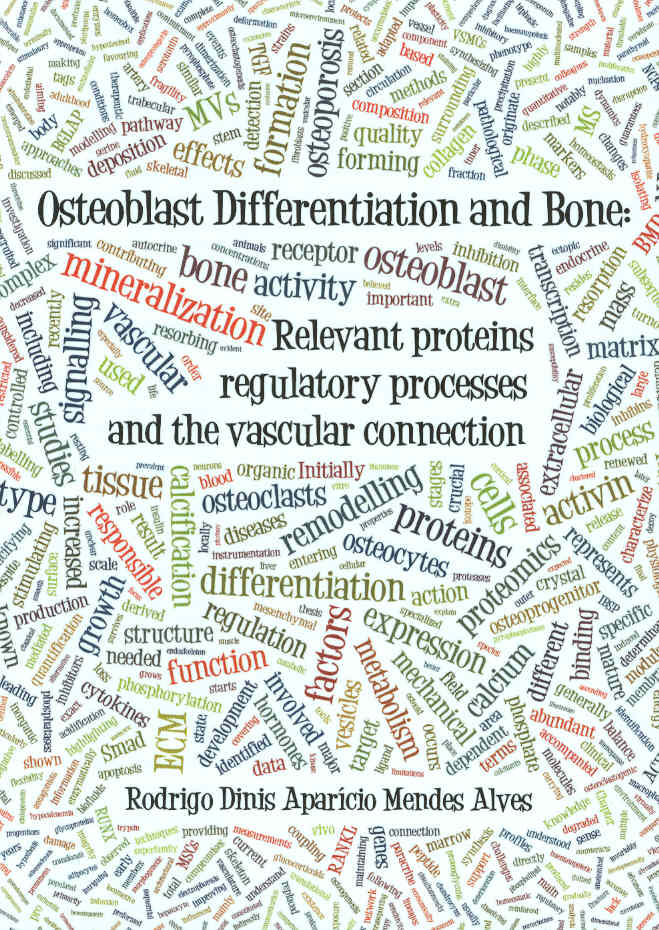
Osteoblast Differentiation and Bone: Relevant proteins, regulatory processes and the vascular connection
Publication
Publication
Osteoblast Differentiatie en Bot: Belangrijke eiwitten, regulerende processen en de vasculaire verbinding
Bone is a highly specialized form of connective tissue present in most vertebrate animals as part of the endoskeleton. Structurally speaking, bone is mainly constituted by an organic extracellular matrix (ECM) hardened by deposited mineral. The blending between the organic and inorganic parts originates two main types of osseous tissue. The outer part of the tissue, the cortex, is hard compact bone and surrounds the inner trabecular bone, a spongy-like structure. In terms of function, bone provides mechanical support for the body, being a key component of the locomotive system, and protects vital organs, such as brain, spinal cord, heart and lungs from harmful impacts that could result in damage. Bone houses the bone marrow cavity as well as an extensive network of blood vessels. The interface between bone and these surrounding tissues is associated to its metabolic functions, such as supporting haematopoiesis and maintaining the blood calcium levels. Besides the storage of calcium important for the body, the bone ECM is also a rich reservoir of cytokines and growth factors involved in autocrine, paracrine and endocrine signaling.
| Additional Metadata | |
|---|---|
| , , | |
| Erasmus University, Nederlandse Vereniging voor Calcium- en Botstofwisseling (NVCB) | |
| J.P.T.M. van Leeuwen (Hans) | |
| Erasmus University Rotterdam | |
| hdl.handle.net/1765/37162 | |
| Organisation | Erasmus MC: University Medical Center Rotterdam |
|
Alves, R. (2012, September 5). Osteoblast Differentiation and Bone: Relevant proteins, regulatory processes and the vascular connection. Retrieved from http://hdl.handle.net/1765/37162 |
|
| Additional Files | |
|---|---|
| 3570_Alves, Rodrigo Dinis Aparicio Mendes.jpg Cover Image , 122kb | |
| Stellingen Alves.pdf , 25kb | |