2005-04-28
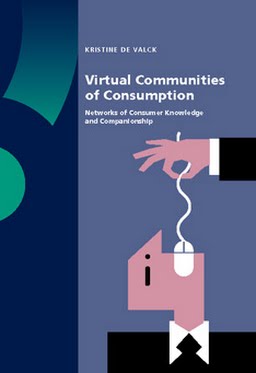
Virtual Communities of Consumption: Networks of Consumer Knowledge and Companionship
Publication
Publication
Virtuele connecties tussen consumenten: Netwerken van consumptiekennis en kameraadschap
Marketers have to deal with consumers who increasingly interact with other consumers through the Internet. Electronically based discussion forums, bulletin boards, list servers, chat rooms, and newsgroups provide consumers worldwide with the ability to share their knowledge, experiences, and opinions. The popularity of electronic consumer exchanges is reflected in the vast number of virtual communities that specifically focus on consumption-related interests. These virtual communities of consumption represent substantial networks of consumer knowledge and companionship that affect consumer behavior. This dissertation presents three empirical studies that offer systematic insight in various aspects of virtual community participation and its effects on consumer decision-making. It establishes that members attach more value to the virtual community as a source of information than to other sources including traditional media. Furthermore, it demonstrates that virtual communities increase consumer knowledge and alter choice behavior. An analysis of member participation patterns has resulted in a member typology that enables marketers to locate interesting target segments and that offers insights in how to address them. Finally, the dissertation presents an illustration of online forum discussion practices that highlights how discussants communicate with, and actively try to influence, each other. It shows that members share an interest in the community’s focal topic, but that their related opinions and behaviors greatly differ. Ultimately, to the benefit of both academics and marketers, the dissertation provides a better understanding of the functioning of virtual communities as sites of interpersonal influence.
| Additional Metadata | |
|---|---|
| , , , , , , , | |
| , , | |
| B. Wierenga (Berend) , G.H. van Bruggen (Gerrit) | |
| Erasmus University Rotterdam | |
| hdl.handle.net/1765/6663 | |
| ERIM Ph.D. Series Research in Management | |
| Organisation | Erasmus Research Institute of Management |
|
de Valck, K. (2005, April 28). Virtual Communities of Consumption: Networks of Consumer Knowledge and Companionship (No. 50). ERIM Ph.D. Series Research in Management. Retrieved from http://hdl.handle.net/1765/6663 |
|