2003-10-22
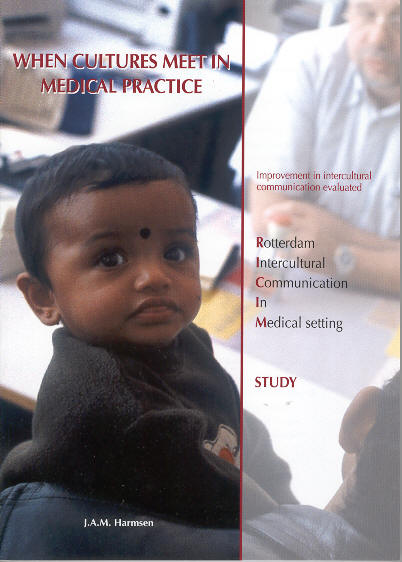
When Cultures Meet in Medical Practice: Improvement in intercultural communication evaluated
Publication
Publication
Cultuurverschillen in medische consulten: Evaluatie van verbetering in interculturele communicatie
Abstract
Working in an urban general practice in a deprived neighborhood for 23 years it was clear from the beginning that contacts with patients from an ethnic minority were sometimes problematic. Although this did not really manifest itself at the level of the personal relationship, there were indeed some barriers in communication. In general, ethnic minority patients were loyal and polite and on the one hand had the same worries and questions as Dutch patients, on the other hand in a substantial number of medical encounters the contact appeared to be difficult. The reason for this included: not understandable or recognizable reasons for the encounter, lack of patient’s compliance from the physician’s point of view, impossibility of discussing psycho-social matters, and a high frequency of encounters. It was obvious that language was not the only barrier: the cultural background appeared to play an even more important role. In 1982 Dorrenboom clearly indicated cultural difficulties in contacts with ethnic minority patients by describing a number of cases. Similar to most other physicians, in those days I expected that in the course of time these patients would integrate in Dutch society, become acquainted with the Dutch healthcare system, and would adapt to a new (Western) formulation of health problems and their solutions. I also expected that the second generation of ethnic minority patients would have less problems and would be more adapted to Dutch society and healthcare. Although in this latter group of patients Dutch language proficiency did increase over time it was obvious that cultural differences remained important in the physician-patient encounter and, consequently, the difficulties remained. It was not until the end of the decade 1980- 1990 that publications appeared about differences in delivery of (primary) healthcare between patients from different ethnic origins. It became increasingly clear that physicians experienced their contacts with a large proportion of ‘culturally different’ patients as problematic. Concurrently, ethnic minority patients also experienced their relationship with the physician as difficult. Leeflang found culturally-defined differences in ways of asking for medical help within the group of Turkish patients compared with Dutch patients. Furthermore, communication with patients from different ethnic origins seems to be disturbed by more than a lack of language proficiency alone. This generated the question: What are the possible causes, consequences and solutions for difficulties in intercultural medical encounters, especially regarding the communication between physician and patient, and which consequences arise from it for the physician-patient relationship and for primary healthcare in general?
| Additional Metadata | |
|---|---|
| , , , | |
| S. Thomas (Siep) , D. Pinto (Duane) | |
| Erasmus University Rotterdam | |
| hdl.handle.net/1765/51253 | |
| Organisation | Erasmus MC: University Medical Center Rotterdam |
|
Harmsen, H. (2003). When Cultures Meet in Medical Practice: Improvement in intercultural communication evaluated.http://hdl.handle.net/1765/51253 |
|