2016-12-13
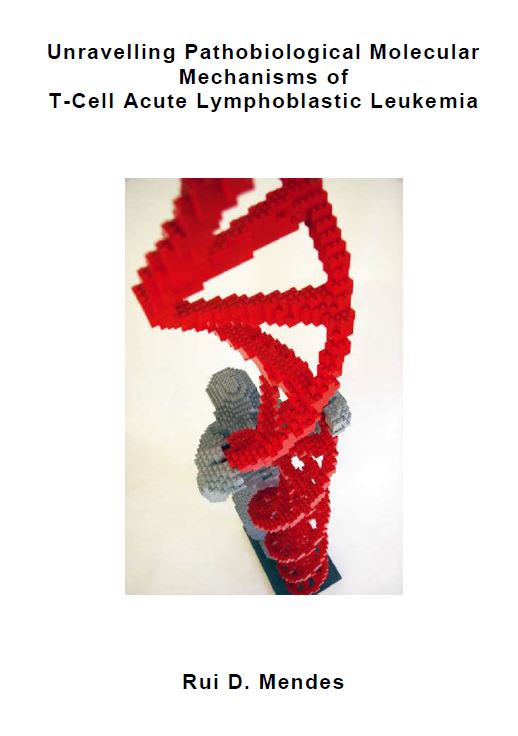
Unravelling Pathobiological Molecular Mechanisms of T-Cell Acute Lymphoblastic Leukemia
Publication
Publication
Het ontrafelen van pathobiologische moleculaire mechanismes in T-cel acute lymphoblastische leukemie
T-cell acute lymphoblastic leukemia (T-ALL) represents 10-15% of pediatric acute leukemias. Despite major therapeutic improvements due to treatment intensification and refined risk-adapted stratification during the past decade, ~30% of T-ALL cases relapse with very poor prognosis. T-cell transformation is characterized by aberrant expression of oncogenic transcription factors combined with inactivation of tumor suppressor genes (e.g. PTEN, CDKN2A) and/or activation of the NOTCH1 pathway. The ectopic expression of oncogenes is typically caused by chromosomal rearrangements that place oncogenes under the control of T-cell specific promoters or enhancer elements.
This thesis aimed to:
1) identify additional PTEN-inactivating events as novel type-B mutations that may provide survival and proliferation advantage to (pre)-leukemic cells, and understand their clinical impact in T-ALL;
2) establish an in vitro co-culture system (OP9-DL1) that supports T-cell development from human umbilical cord blood-derived hematopoietic stem cells (HSCs), with the intention of defining distinct human T-cell development stages in relation to the underlying transcriptional programs and expression of cell surface markers;
3) optimize a lentivirus system that supports transduction and stable expression of oncogenes in human and mouse HSCs and
4) study the impact of ETP-ALL expressed oncogenes (such as MEF2C, LYL1 or LMO2) on human T-cell development using the OP9-DL1 in vitro system
| Additional Metadata | |
|---|---|
| , , , , , | |
| R. Pieters (Rob) , J.P.P. Meijerink (Jules) | |
| Erasmus University Rotterdam | |
| The studies described in this thesis were financially supported by Stichting Kinderen Kankervrij (KiKa). | |
| hdl.handle.net/1765/98183 | |
| Organisation | Department of Orthopaedics |
|
Mendes, R. D. (2016, December 13). Unravelling Pathobiological Molecular Mechanisms of T-Cell Acute Lymphoblastic Leukemia. Retrieved from http://hdl.handle.net/1765/98183 |
|
| Additional Files | |
|---|---|
| Cover-image-Mendes.JPG Cover Image , 43kb | |
| Propositions-.pdf , 57kb | |
| available online | |
| 4623_Mendes-Rui-Daniel-Martins-Nunes.jpg Cover Image , 21kb | |