2003-10-08
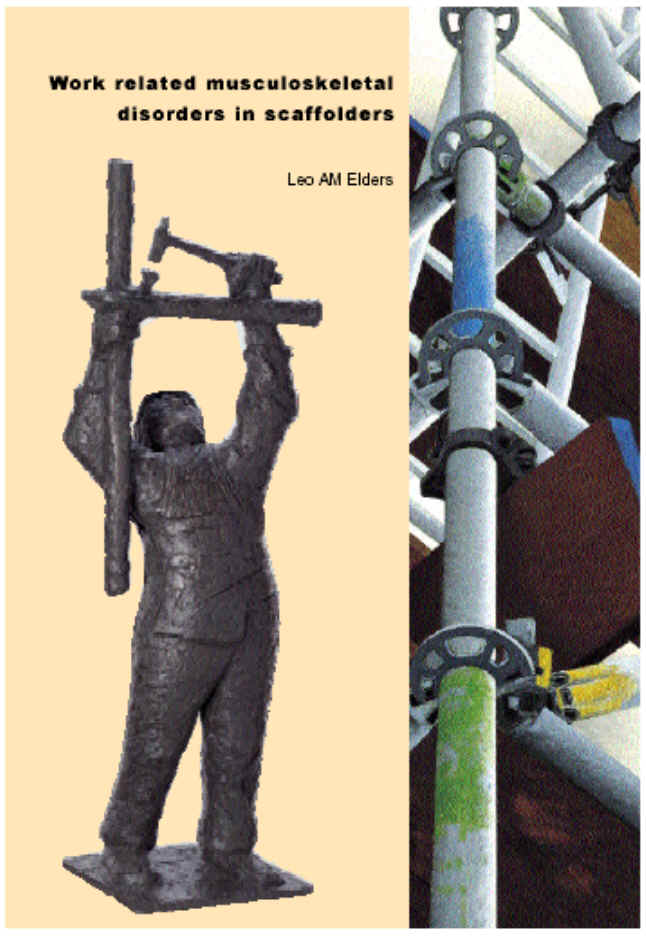
Work Related Musculoskeletal Disorders in Scaffolders
Publication
Publication
Werkgerelateerde aandoeningen van het bewegingsapparaat bij steigerbouwers
In many occupational populations, musculoskeletal disorders constitute an important source of morbidity, sickness absence, and disability and attribute to a substantial social and economic burden for society. This is certainly applicable to scaffolders, the study population in this thesis. Although many research efforts have been undertaken, relationships between various work-related risk factors and different stages of musculoskeletal disorders still remain unclear. A theoretical model serves as a framework for studying the dynamic character of complaints over time and the impact of workrelated risk factors on the occurrence of low back pain. The consequences of low back pain complaints in terms of sickness absence and disability are studied in order to identify intervention strategies for successfully enhanced return to work.
| Additional Metadata | |
|---|---|
| , , , , , , , | |
| Mackenbach, Prof. Dr. J.P. (promotor), Maetis Arbo, R&M Spreeuwenberg | |
| J.P. Mackenbach (Johan) | |
| Erasmus University Rotterdam | |
| hdl.handle.net/1765/1110 | |
| Organisation | Erasmus MC: University Medical Center Rotterdam |
|
Elders, L. (2003, October 8). Work Related Musculoskeletal Disorders in Scaffolders. Retrieved from http://hdl.handle.net/1765/1110 |
|
| Additional Files | |
|---|---|
| 00.pdf Final Version , 834kb | |
| 05.pdf Final Version , 551kb | |
| 08.pdf Final Version , 318kb | |
| 30.pdf Final Version , 264kb | |
| 03.pdf Final Version , 212kb | |
| 02.pdf Final Version , 204kb | |
| 06.pdf Final Version , 194kb | |
| 04.pdf Final Version , 165kb | |
| 01.pdf Final Version , 134kb | |
| 09.pdf Final Version , 80kb | |
| 32.pdf Final Version , 65kb | |
| Elders_front.jpg Cover Image , 58kb | |
| 001.pdf Final Version , 53kb | |
| 21.pdf Final Version , 45kb | |
| 20.pdf Final Version , 45kb | |
| 31.pdf Final Version , 36kb | |