1993-03-10
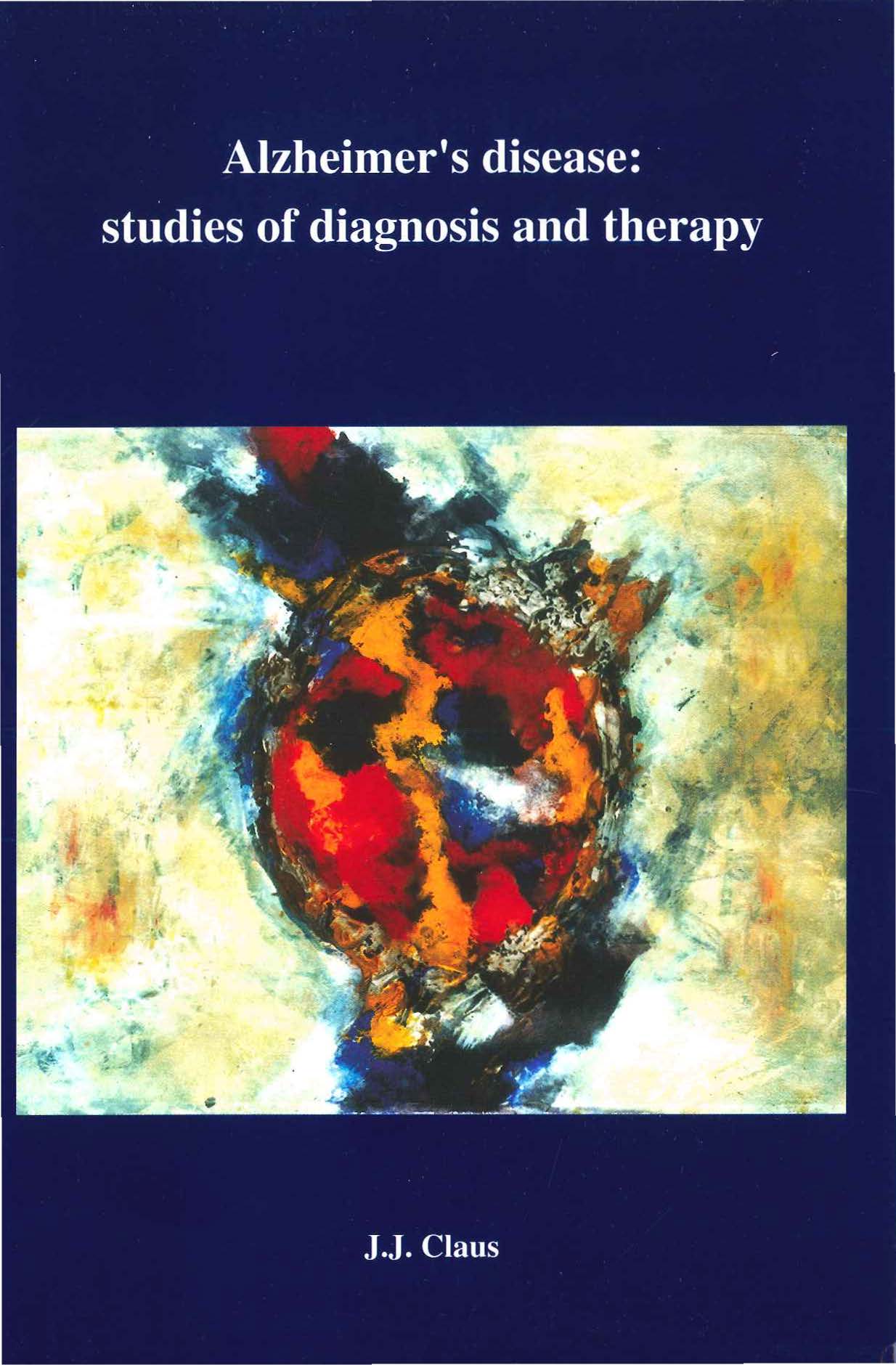
Alzheimer's disease: studies of diagnosis and therapy
Publication
Publication
De ziekte van Alzheimer: diagnostische en therapeutische studies
Despite tremendous recent advances in the clinical neurology, neurobiology and epidemiology of Alzheimer's disease, the cause as well as its treatment remains as much a mystery today as when it was first described in 1907 by Alois Alzheimer.' Alzheimer's disease, the most common type of dementia in the elderlf and already referred to as the disease of the century, is one of the major social and medical challenges for clinical practice as well as for scientific medicine, especially since the number of Alzheimer patients is predicted to rise strongly into the next century.3 Studies presented in this thesis deal with issues that confront patients suffering from Alzheimer's disease and their families and caregivers every day: the uncertainty of the clinical diagnosis and the lack of adequate treatment The focus will be on single photon emission computed tomography (SPECT) as a method to assess regional cerebral blood flow (rCBF), its methods of analysis and the contribution to the clinical diagnosis. In addition, aspects of two therapeutic strategies will be explored: stimulation of neuronal metabolism and modulation of neurotransmitter dependent processes. Much of the work presented is guided by epidemiological principles and methods. This coincides with the clinical neurological point of view that is a leading thread running through this thesis.
| Additional Metadata | |
|---|---|
| , , , , , , | |
| A. Hofman (Albert) , F.G.A. van der Meché (Frans) | |
| Erasmus University Rotterdam | |
| hdl.handle.net/1765/38442 | |
| Organisation | Erasmus MC: University Medical Center Rotterdam |
|
Claus, J. J. (1993, March 10). Alzheimer's disease: studies of diagnosis and therapy. Retrieved from http://hdl.handle.net/1765/38442 |
|
| Additional Files | |
|---|---|
| 0900_CLAUS, Jules Johan.jpg Cover Image , 165kb | |
| Stellingen Claus, Jules Johan.pdf , 28kb | |